
George Skinner
c.1800 – death unknown
Convict, postmaster, storekeeper and proprietor of Skinner’s Family Hotel, Sydney
George Skinner’s life appears to have taken him from the criminal courts of London to the commercial and social life of colonial New South Wales. Transported to Australia in 1828 for embezzlement, he appears to have rebuilt his life in the colony, becoming a storekeeper and postmaster in the Camden district before establishing a successful hotel business in Sydney.
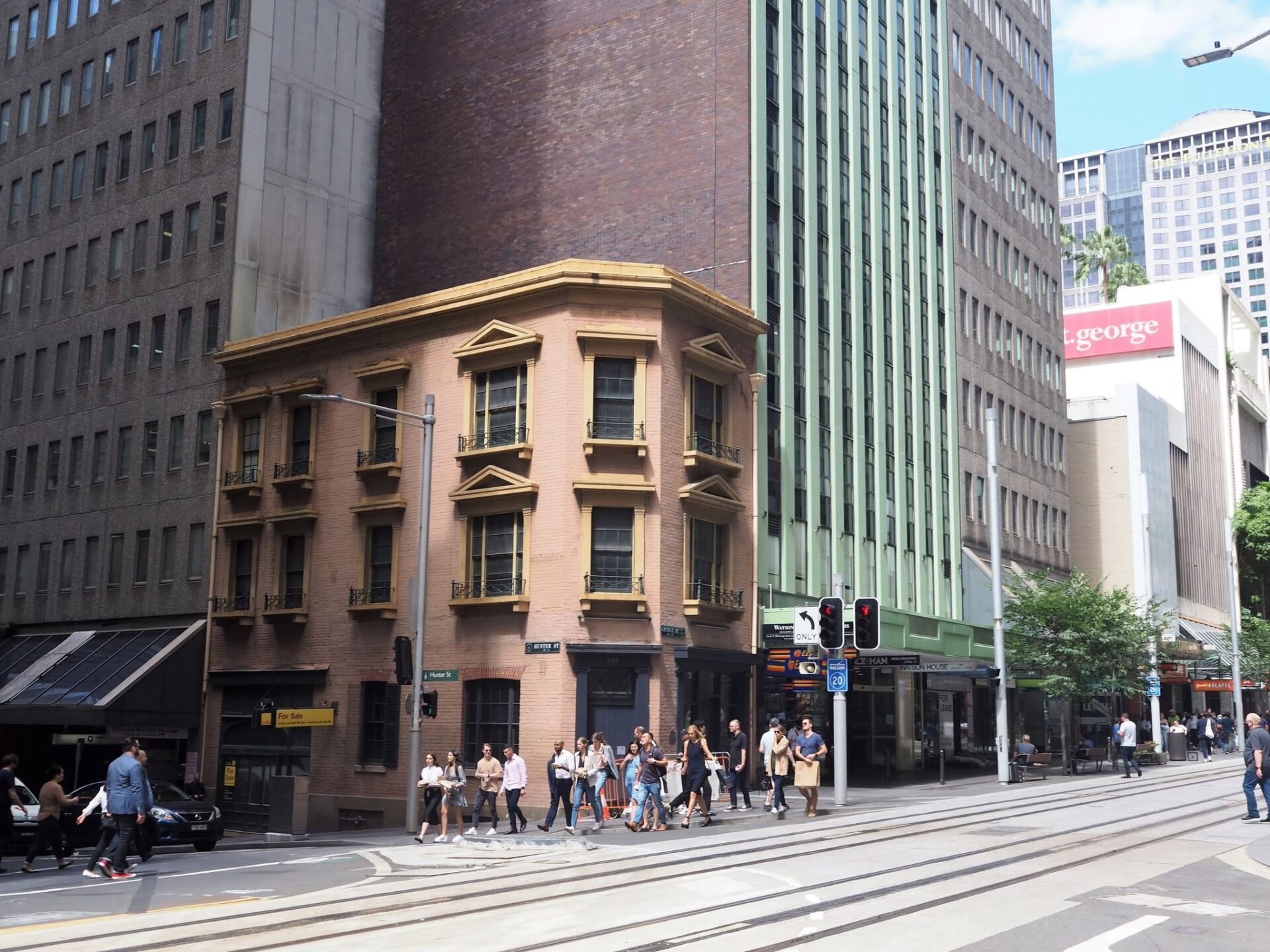
His best-known legacy is Skinner’s Family Hotel, a historic Sydney tavern that still stands at 296 George Street, on the corner of Hunter Street in the heart of Sydney’s central business district. Built in 1845–46, the heritage-listed building is one of the oldest surviving commercial buildings in Sydney.
Behind this familiar Sydney landmark lies the remarkable story of a man believed to have arrived in New South Wales as a transported convict in 1828, before becoming a postmaster, storekeeper and successful hotelkeeper.
Although no single document has yet been found conclusively identifying the transported convict as the later hotelkeeper, a considerable body of evidence suggests that they were the same man. The relationship between George and the wider Skinner family documented on this website has not yet been established.
Early Life in England
George Skinner was born in London around 1800. He was married to Elizabeth and was employed as a merchant’s clerk before his conviction in 1828.
A petition submitted by Elizabeth following his conviction provides some insight into George’s family background. His father was described as a longstanding employee of the East India Company who had also been a licensed victualler, residing in Crucifix Lane, Bermondsey.
Research has identified a possible connection to James Skinner, a publican associated with the Dog and Bear in Crucifix Lane, and to a George Skinner baptised at St Luke’s, Old Street, London, in 1800, the son of James and Ann Skinner. This identification remains to be confirmed.
The family’s association with the hotel trade is particularly interesting in light of George’s later career in Sydney.
Conviction and Transportation (1828)
On 21 February 1828, aged approximately 28, George appeared before the Old Bailey in London on charges of embezzlement.
He had been employed as a clerk by Richard Buckle and was accused of dishonestly retaining money received on his employer’s behalf.
Two charges were brought against him:
- Embezzling £2 9s received from a man named Ward, of which he was found not guilty.
- Embezzling £13 15s 6d received from a man named Frost, of which he was found guilty.
George was sentenced to transportation for fourteen years.
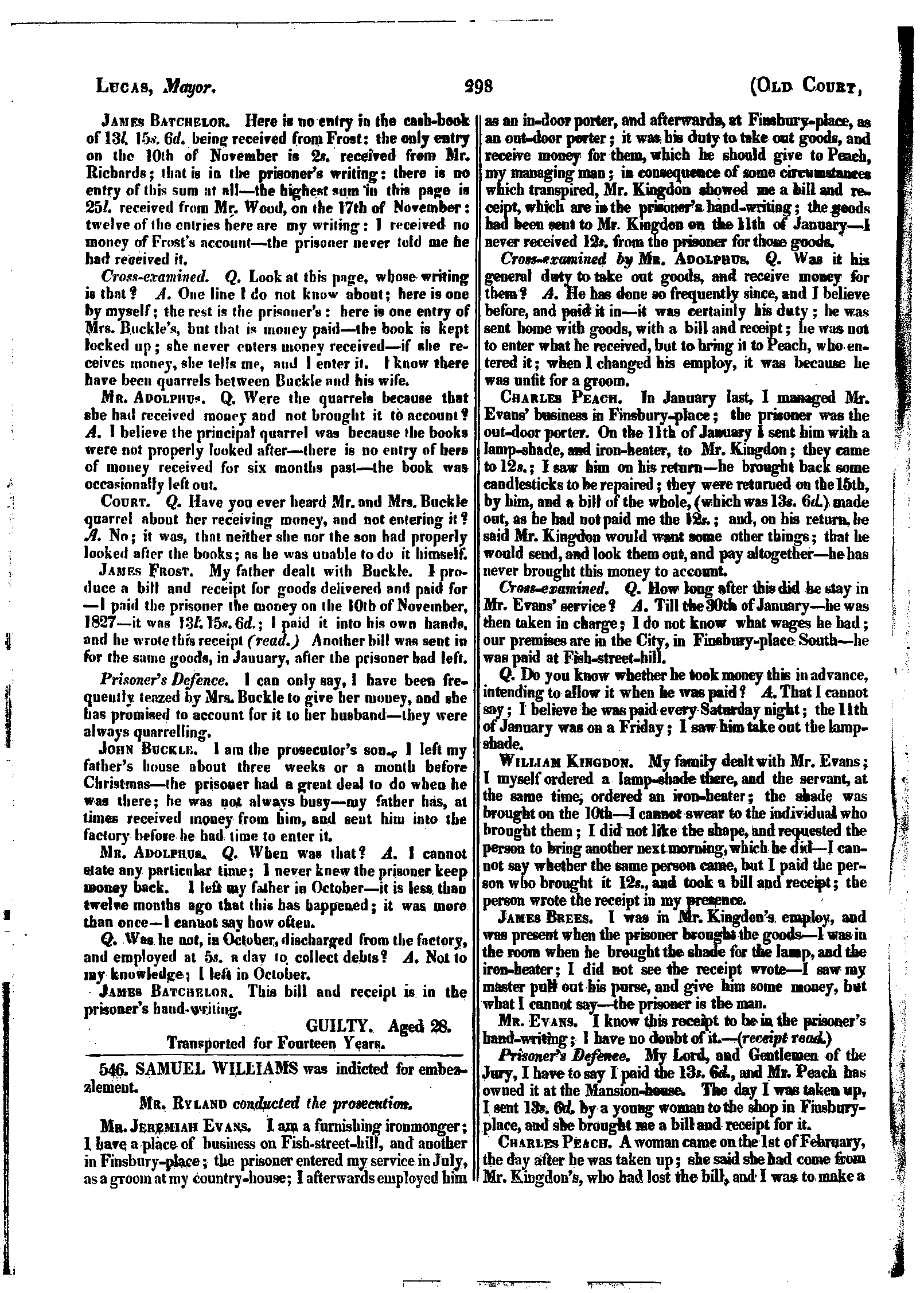
Read the full Old Bailey trial transcript (21 February 1828)
Trial of George Skinner – 21 February 1828
Source: Proceedings of the Old Bailey, London.
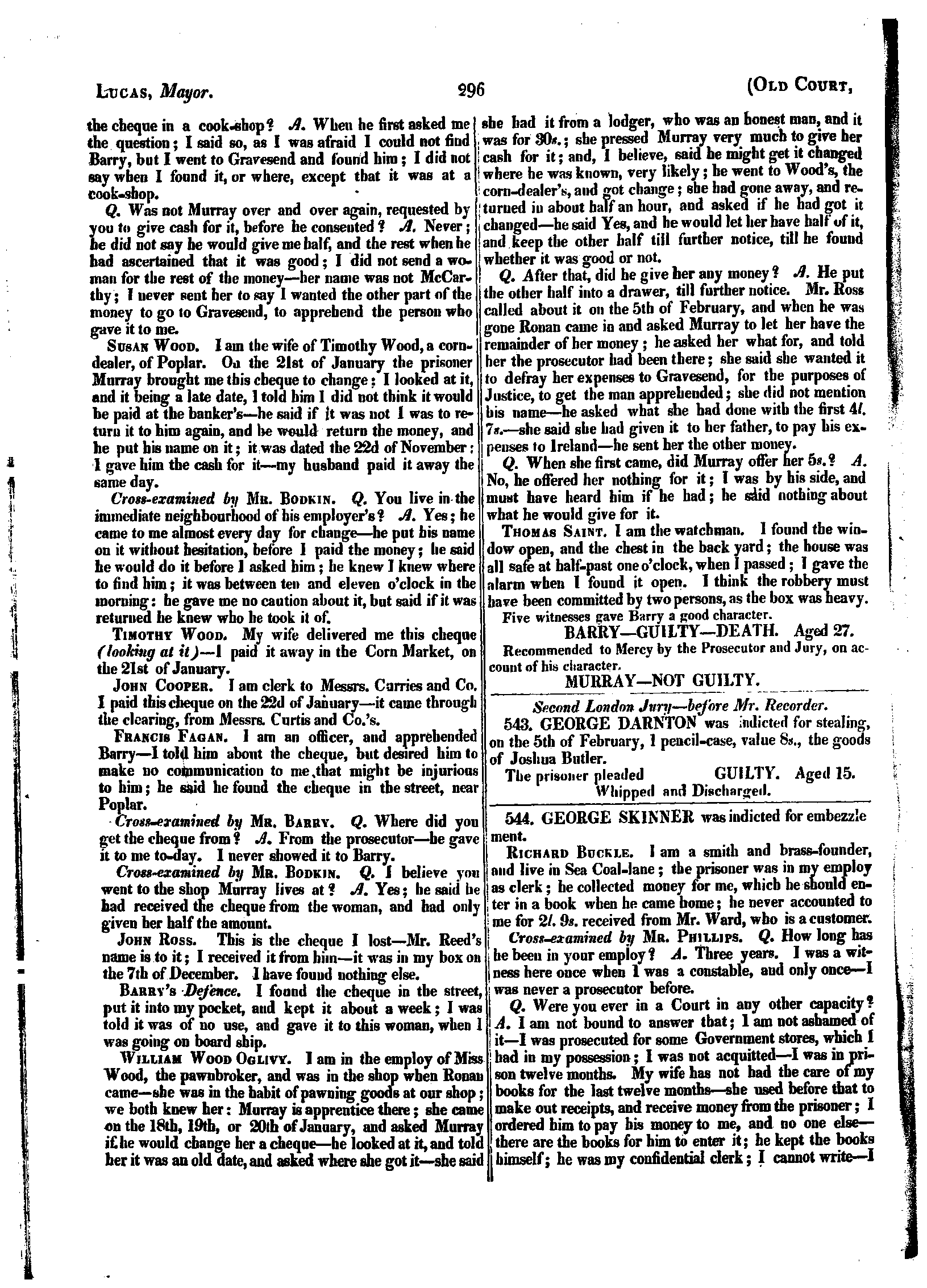
GEORGE SKINNER. Theft; embezzlement. 21st February 1828.
544. GEORGE SKINNER was indicted for embezzlement .
RICHARD BUCKLE . I am a smith and brass-founder , and live in Sea Coal-lane; the prisoner was in my employ as clerk ; he collected money for me, which he should enter in a book when he came home; he never accounted to me for 2l. 9s. received from Mr. Ward, who is a customer.
Cross-examined by MR. PHILLIPS. Q. How long has he been in your employ? A. Three years. I was a witness here once when I was a constable, and only once – I was never a prosecutor before.
Q. Were you ever in a Court in any other capacity? A. I am not bound to answer that; I am not ashamed of it – I was prosecuted for some Government stores, which I had in my possession; I was not acquitted – I was in prison twelve months. My wife has not had the care of my books for the last twelve months – she used before that to make out receipts, and receive money from the prisoner; I ordered him to pay his money to me, and no one else – there are the books for him to enter it; he kept the books himself; he was my confidential clerk; I cannot write – I
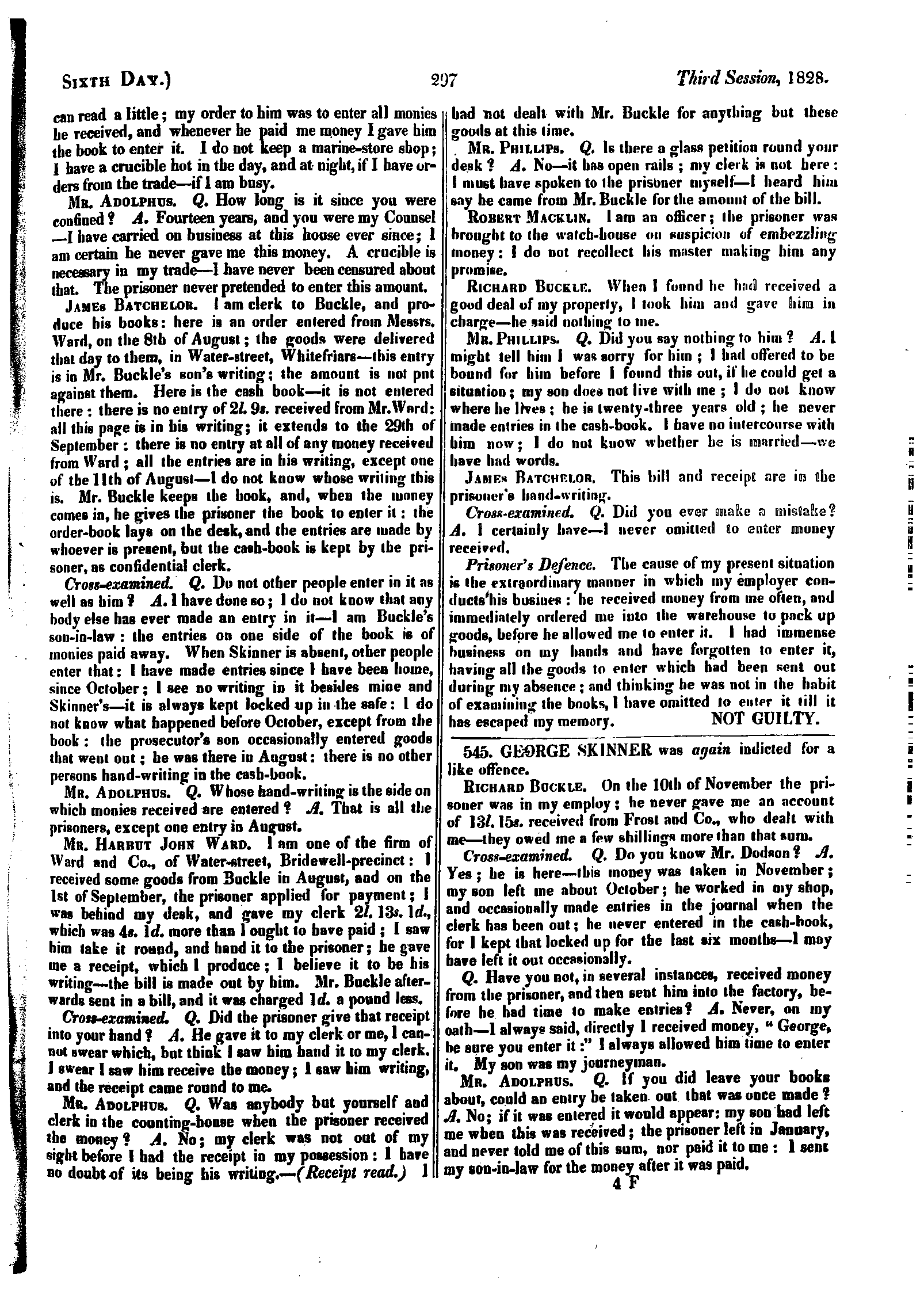
can read a little; my order to him was to enter all monies he received, and whenever he paid me money I gave him the book to enter it. I do not keep a marine-store shop; I have a crucible hot in the day, and at night, if I have orders from the trade – if I am busy.
MR. ADOLPHUS. Q. How long is it since you were confined? A. Fourteen years, and you were my Counsel- I have carried on business at this house ever since; I am certain he never gave me this money. A crucible is necessary in my trade – I have never been censured about that. The prisoner never pretended to enter this amount.
JAMES BATCHELOR . I am clerk to Buckle, and produce his books: here is an order entered from Messrs. Ward, on the 8th of August; the goods were delivered that day to them, in Water-street, Whitefriars – this entry is in Mr. Buckle’s son’s writing; the amount is not put against them. Here is the cash book – it is not entered there: there is no entry of 2l. 9s. received from Mr. Ward: all this page is in his writing; it extends to the 29th of September: there is no entry at all of any money received from Ward; all the entries are in his writing, except one of the 11th of August – I do not know whose writing this is. Mr. Buckle keeps the book, and, when the money comes in, he gives the prisoner the book to enter it: the order-book lays on the desk, and the entries are made by whoever is present, but the cash-book is kept by the prisoner, as confidential clerk.
Cross-examined. Q. Do not other people enter in it as well as him? A. I have done so; I do not know that any body else has ever made an entry in it – I am Buckle’s son-in-law: the entries on one side of the book is of monies paid away. When Skinner is absent, other people enter that: I have made entries since I have been home, since October; I see no writing in it besides mine and Skinner’s – it is always kept locked up in the safe: I do not know what happened before October, except from the book: the prosecutor’s son occasionally entered goods that went out: he was there in August: there is no other persons hand-writing in the cash-book.
MR. ADOLPHUS. Q. Whose hand-writing is the side on which monies received are entered? A. That is all the prisoners, except one entry in August.
MR. HARBUT JOHN WARD . I am one of the firm of Ward and Co., of Water-street, Bridgewell-precinct: I received some goods from Buckle in August, and on the 1st of September, the prisoner applied for payment; I was behind my desk, and gave my clerk 2l. 13s. 1d., which was 4s. 1d. more than I ought to have paid; I saw him take it round, and hand it to the prisoner; he gave me a receipt, which I produce; I believe it to be his writing – the bill is made out by him. Mr. Buckle afterwards sent in a bill, and it was charged 1d. a pound less.
Cross-examined. Q. Did the prisoner give that receipt into your hand? A. He gave it to my clerk or me, I cannot swear which, but think I saw him hand it to my clerk. I swear I saw him receive the money; I saw him writing, and the receipt came round to me.
MR. ADOLPHUS. Q. Was anybody but yourself and clerk in the counting-house when the prisoner received the money? A. No; my clerk was not out of my sight before I had the receipt in my possession: I have no doubt of its being his writing. – (Receipt read.) I had not dealt with Mr. Buckle for anything but these goods at this time.
MR. PHILLIPS. Q. Is there a glass petition round your desk? A. No – it has open rails; my clerk is not here: I must have spoken to the prisoner myself – I heard him say he came from Mr. Buckle for the amount of the bill.
ROBERT MACKLIN . I am an officer; the prisoner was brought to the watch-house on suspicion of embezzling money: I do not recollect his master making him any promise.
RICHARD BUCKLE. When I found he had received a good deal of my property, I took him and gave him in charge – he said nothing to me.
MR. PHILLIPS. Q. Did you say nothing to him? A. I might tell him I was sorry for him; I had offered to be bound for him before I found this out, if he could get a situation; my son does not live with me; I do not know where he lives; he is twenty-three years old; he never made entries in the cash-book. I have no intercourse with him now; I do not know whether he is married – we have had words.
JAMES BATCHELOR . This bill and receipt are in the prisoner’s hand-writing.
Cross-examined. Q. Did you ever make a mistake? A. I certainly have – I never omitted to enter money received.
Prisoner’s Defence. The cause of my present situation is the extraordinary manner in which my employer conducts’ his business: he received money from me often, and immediately ordered me into the warehouse to pack up goods, before he allowed me to enter it. I had immense business on my hands and have forgotten to enter it, having all the goods to enter which had been sent out during my absence; and thinking he was not in the habit of examining the books, I have omitted to enter it till it has escaped my memory. NOT GUILTY .
545. GEORGE SKINNER was again indicted for a like offence .
RICHARD BUCKLE . On the 10th of November the prisoner was in my employ; he never gave me an account of 13l. 15s. received from Frost and Co., who dealt with me – they owed me a few shillings more than that sum.
Cross-examined. Q. Do you know Mr. Dodson? A. Yes; he is here – this money was taken in November; my son left me about October; he worked in my shop, and occasionally made entries in the journal when the clerk has been out; he never entered in the cash-book, for I kept that locked up for the last six months – I may have left it out occasionally.
Q. Have you not, in several instances, received money from the prisoner, and then sent him into the factory, before he had time to make entries? A. Never, on my oath – I always said, directly I received money, “George, be sure you enter it:” I always allowed him time to enter it. My son was my journeyman.
MR. ADOLPHUS. Q. If you did leave your books about, could an entry be taken out that was once made? A. No; if it was entered it would appear: my son had left me when this was received; the prisoner left in January, and never told me of this sum, nor paid it to me: I sent my son-in-law for the money after it was paid.
JAMES BATCHELOR . Here is no entry in the cash-book of 13l. 15s. 6d. being received from Frost: the only entry on the 10th of November is 2s. received from Mr. Richards; that is in the prisoner’s writing: there is no entry of this sum at all – the highest sum in this page is 25l. received from Mr. Wood, on the 17th of November: twelve of the entries here are my writing: I received no money of Frost’s account – the prisoner never told me he had received it.
Cross-examined. Q. Look at this page, whose writing is that? A. One line I do not know about; here is one by myself; the rest is the prisoner’s: here is one entry of Mrs. Buckle’s, but that is money paid – the book is kept locked up; she never enters money received – if she receives money, she tells me, and I enter it. I know there have been quarrels between Buckle and his wife.
MR. ADOLPHUS. Q. Were the quarrels because that she had received money and not brought it to account? A. I believe the principal quarrel was because the books were not properly looked after – there is no entry of here of money received for six months past – the book was occasionally left out.
COURT. Q. Have you ever heard Mr. and Mrs. Buckle quarrel about her receiving money, and not entering it? A. No; it was, that neither she nor the son had properly looked after the books; as he was unable to do it himself.
JAMES FROST . My father dealt with Buckle. I produce a bill and receipt for goods delivered and paid for- I paid the prisoner the money on the 10th of November, 1827 – it was 13l. 15s. 6d.; I paid it into his own hands, and he wrote this receipt (read.) Another bill was sent in for the same goods, in January, after the prisoner had left.
Prisoner’s Defence. I can only say, I have been frequently teazed by Mrs. Buckle to give her money, and she has promised to account for it to her husband – they were always quarrelling.
JOHN BUCKLE. I am the prosecutor’s son. I left my father’s house about three weeks or a month before Christmas – the prisoner had a great deal to do when he was there; he was not always busy – my father has, at times received money from him, and sent him into the factory before he had time to enter it.
MR. ADOLPHUS. Q. When was that? A. I cannot state any particular time; I never knew the prisoner keep money back. I left my father in October – it is less than twelve months ago that this has happened; it was more than once – I cannot say how often.
Q. Was he not, in October, discharged from the factory, and employed at 5s. a day to collect debts? A. Not to my knowledge; I left in October.
JAMES BATCHELOR . This bill and receipt is in the prisoner’s hand-writing.
GUILTY . Aged 28.
Transported for Fourteen Years .
The convict records describe him as a native of London, a merchant’s clerk and approximately 5 feet 5½ inches in height.
Elizabeth’s Petition
On 30 March 1828, shortly after George’s conviction, his wife Elizabeth petitioned for clemency.
Living at 10 Bear Yard, Lincoln’s Inn Fields, London, Elizabeth appealed on behalf of her husband, drawing attention to his family background and circumstances.
The petition referred to George’s father’s long service with the East India Company and his occupation as a licensed victualler. It provides valuable information about a family whose circumstances were dramatically altered by George’s conviction.
Despite Elizabeth’s appeal, George was transported to New South Wales aboard the convict ship Albion.
The Albion, under Captain James Ralph, departed Sheerness on 1 June 1828 and arrived at Port Jackson on 3 November 1828, after a voyage of approximately five months. George was among the 188 male convicts who survived the voyage.
A New Life in New South Wales (1828–1838)
Little has yet been established about George’s first years in the colony or his original convict assignment.
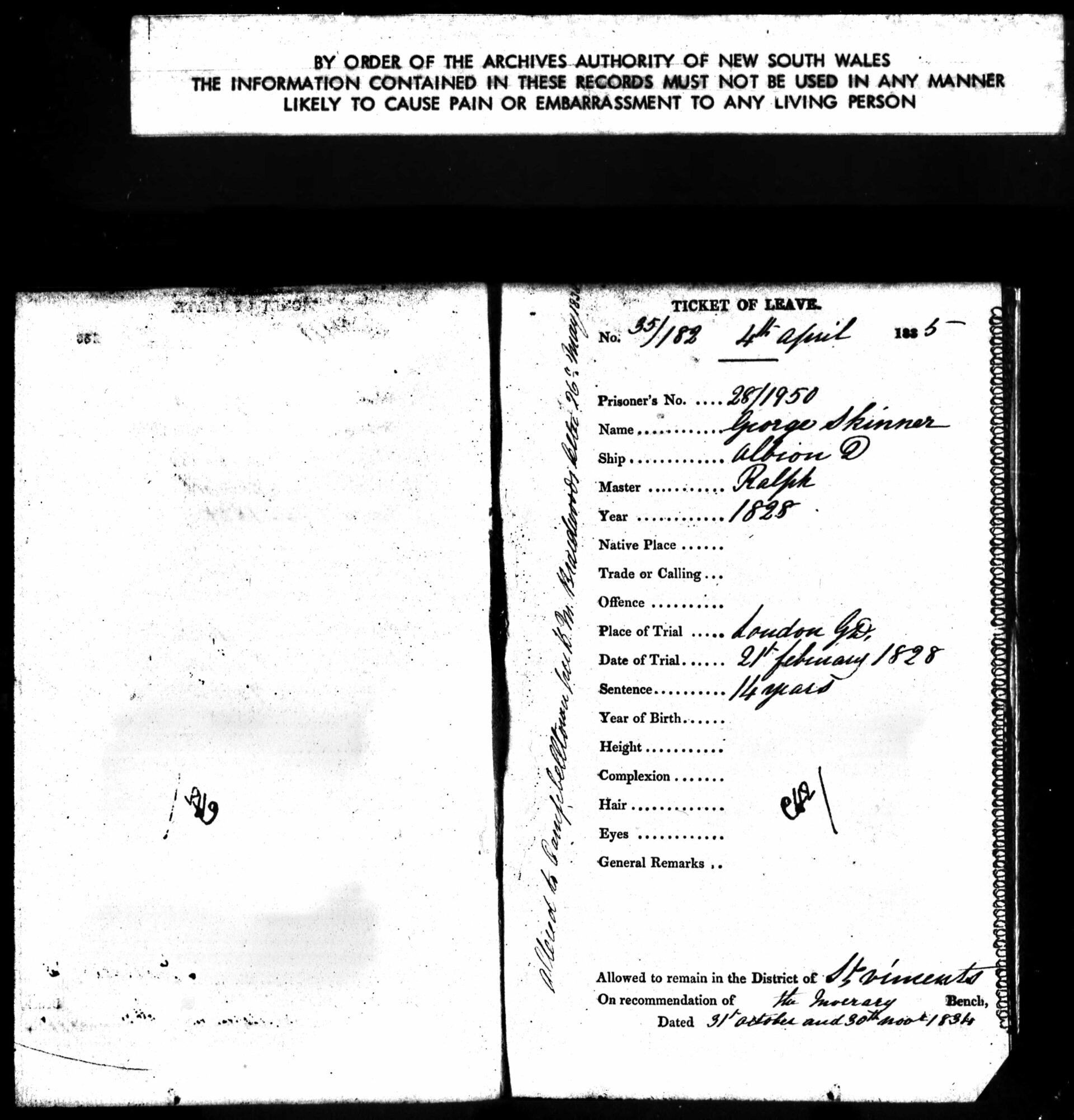
On 4 April 1835, however, he was granted Ticket of Leave No. 35/182, initially permitting him to reside and work in the district of St Vincent, on the recommendation of the Inverary Bench. A ticket of leave allowed a convict to work for his own benefit and live with a degree of independence, although he remained subject to restrictions on his movements and other conditions.
The 1837 convict muster records George Skinner, aged 36, as a ticket-of-leave holder in the district of St Vincent, identifying him by his arrival aboard the Albion in 1828. An annotation on his ticket of leave records a transfer to the Campbelltown district in May 1838. This is significant because the next chapter of George’s probable life places him in the nearby Camden district.
Elizabeth and the Journey to Australia
An important discovery is the arrival in Sydney of a Mrs Elizabeth Skinner and a child aboard the Henry Wellesley on 7 February 1836. Although the vessel was transporting female convicts, Elizabeth was travelling as a free passenger.
The ship’s surgeon, Robert Wylie, recorded Elizabeth as a 35-year-old free woman who was treated for tonsillitis during the voyage. The timing of her arrival, less than a year after George received his ticket of leave, raises the possibility that she was his wife travelling to Australia to reunite the family. This would also help explain the later appearance of George Skinner junior in the family’s business affairs.
Postmaster and Storekeeper at Elderslie (1839–1844)
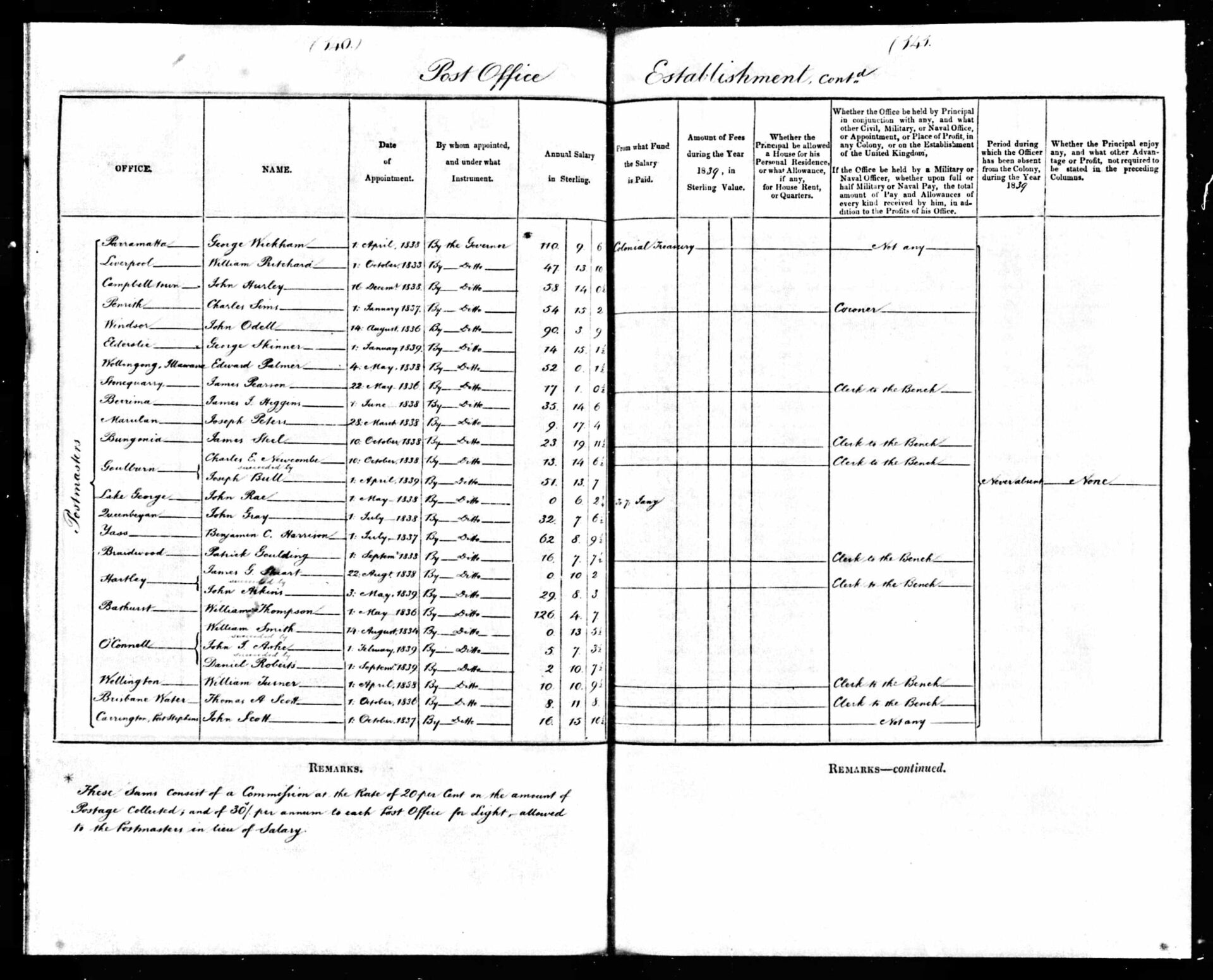
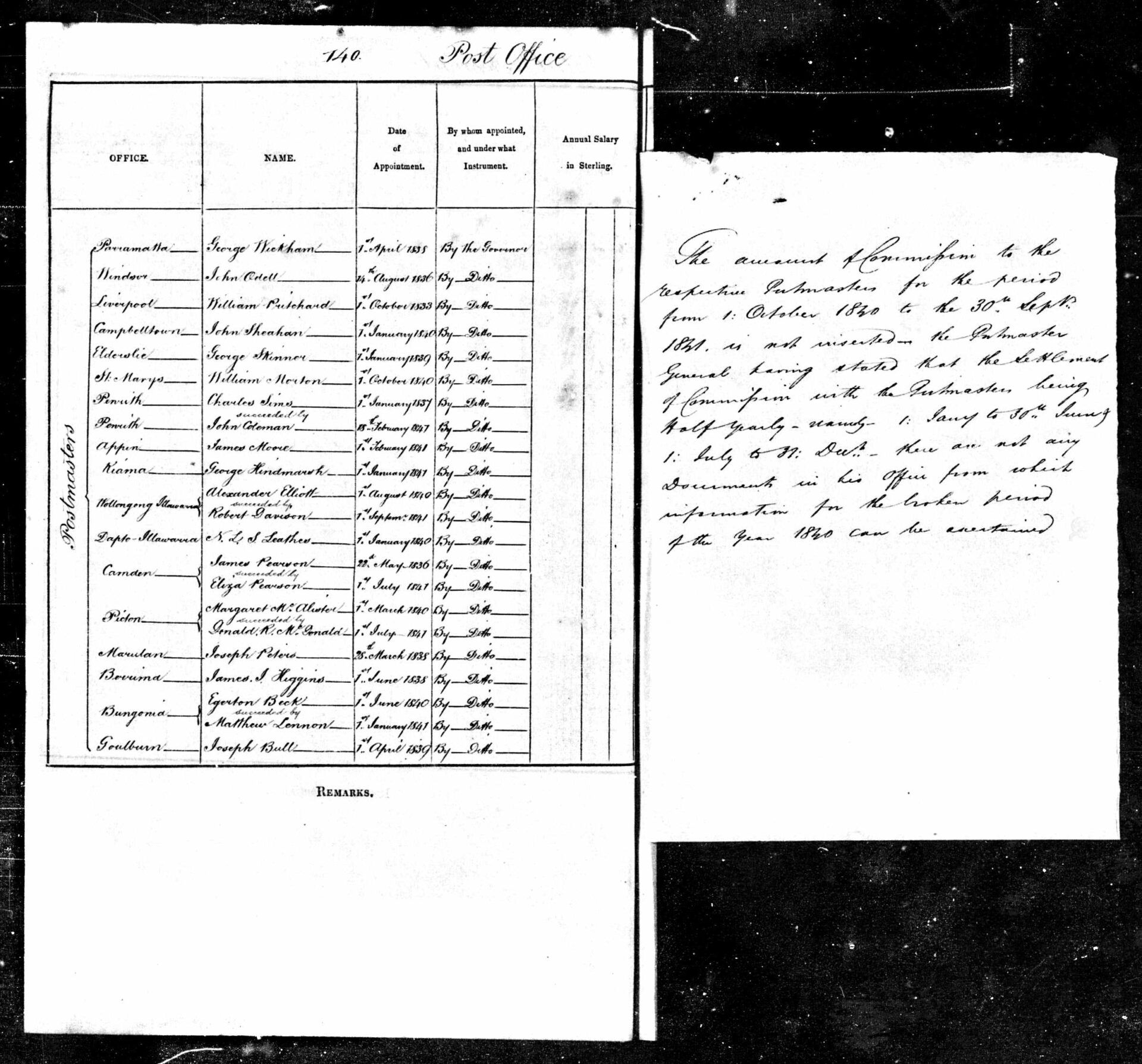
By the beginning of 1839, a George Skinner was established in the Camden district.
He was appointed postmaster at Elderslie on 1 January 1839. The colonial government returns record his remuneration as £14 15s 1½d in 1839 and £21 17s 10d in 1840.
Elderslie, situated near the Cowpasture Bridge crossing of the Nepean River, was an important stopping point for travellers and settlers moving through the Camden district. George also operated the Cowpasture Bridge General Store, supplying goods to residents of the surrounding districts. An advertisement published in the Sydney Morning Herald on 28 October 1843 announced that he had reduced the prices of his extensive stock for customers paying in cash.
The business appears to have been well established, serving both the local community and the wider Cowpastures district.
Certificate of Freedom (1842)
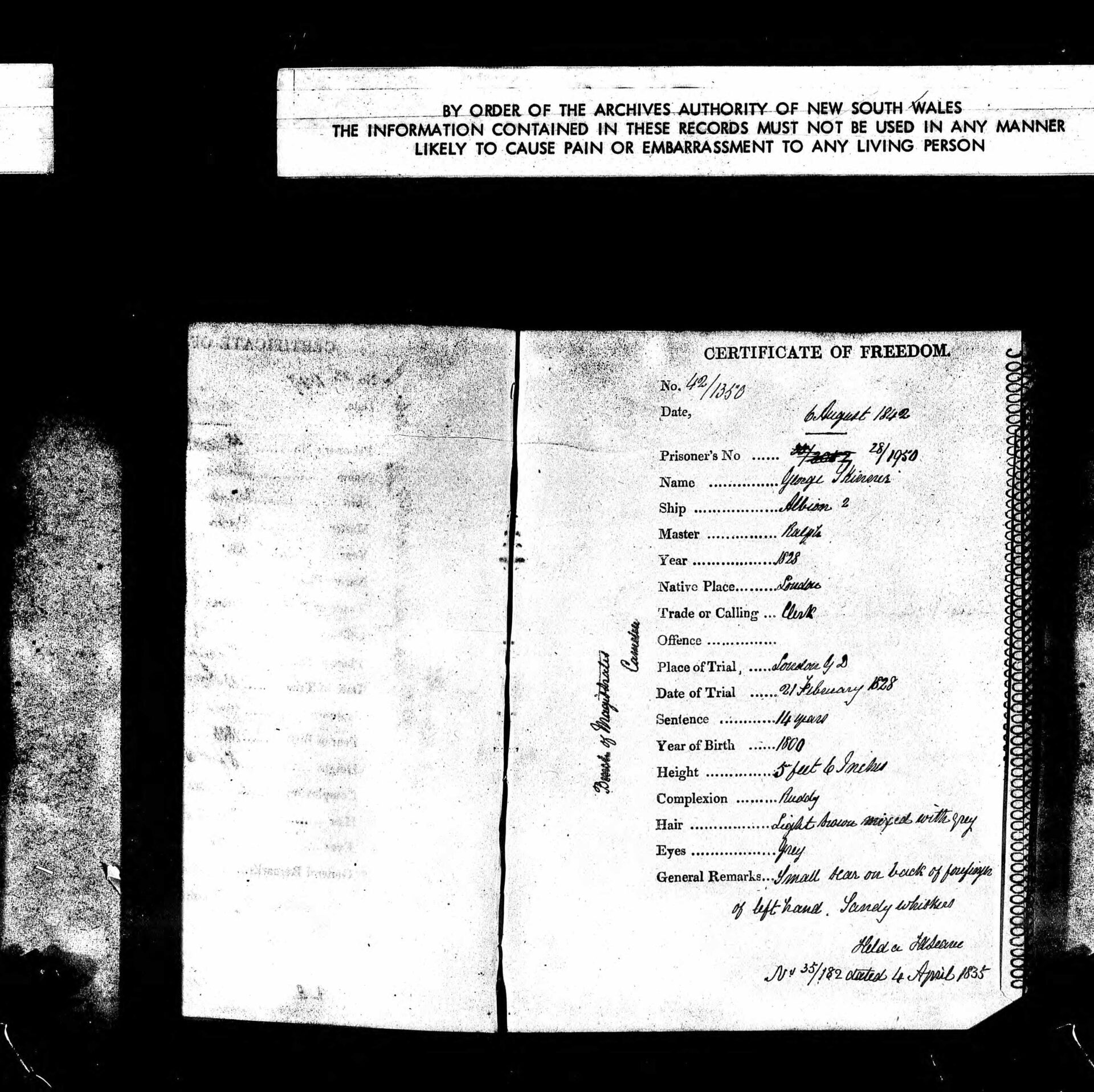
On 6 August 1842, George Skinner of the Albion received Certificate of Freedom No. 42/1350, associated with the Camden Bench. Having completed his fourteen-year sentence, he was no longer subject to the restrictions of convict servitude.
The reference to Camden is another important connection between the convict records and the George Skinner who operated the Elderslie store and post office.
Moving to Sydney (1844)
In October 1844, George decided to leave his storekeeping business and establish himself in Sydney. Advertisements announced the sale of his stock-in-trade, cattle and other possessions at his premises near Cowpasture Bridge.
He acquired the Clown Hotel in Pitt Street, opposite the Royal Victoria Theatre, from the well-known actor and theatrical entrepreneur George Coppin. A newspaper advertisement of 18 December 1844 provides a particularly valuable link between George’s two businesses. Writing from the Clown Hotel in Sydney, he requested that customers owing money from his former Elderslie store settle their accounts with Mr G. Skinner junior.
This advertisement confirms that the Elderslie storekeeper and the Sydney hotelkeeper were the same man. It also places George junior in the family’s business affairs by 1844.
The Clown Hotel (1844–1846)
George’s first Sydney hotel was situated in Pitt Street, opposite one of the colony’s principal theatres.
The Clown Hotel was more than a public house. Its large saloon provided a venue for music, comic performances, recitations and other forms of popular entertainment. George continued the entertainment tradition established by his predecessor, George Coppin, presenting visiting performers, singers and musicians.
An advertisement in October 1844 promoted an evening featuring theatrical performances, the celebrated cellist Mr Thompson and Scottish songs performed by Mr Caldwell. In February 1845, George advertised a series of musical entertainments that included the unusual attraction of handbell ringing, with performances on sets of eight, ten and twelve bells. These advertisements reveal something of the lively entertainment culture of Sydney in the 1840s and George’s involvement in it.
The Independent Order of Odd Fellows
George is also recorded as secretary of the Australian Grand Lodge of the Independent Order of Odd Fellows. In October 1846, he helped promote a benefit performance at the Victoria Theatre for a fellow member, the actor Thomas Simes, who was in poor health and difficult financial circumstances. His involvement in the Odd Fellows suggests that George had become an active participant in Sydney’s social and charitable life.
Skinner’s Family Hotel (1847–1852)
In January 1847, George announced that he had moved from the Clown Hotel in Pitt Street to new premises on the corner of George and Hunter Streets.
In an advertisement published in The Australian on 12 January 1847, he thanked his former customers for their patronage and advised them that he intended to operate the new establishment as a tavern and family hotel.
The building had been constructed in 1845–46 for Isaac Simmons and was designed by architect Henry Robertson. Its prominent corner position, classical architectural features and substantial accommodation made it a notable building in the developing colonial city. Known variously as the Clown Hotel, Skinner’s Hotel and Skinner’s Family Hotel, the premises became closely associated with George’s name.
Sydney in 1848
The hotel was recorded in the 1848 Bourke Ward assessment book at 218 George Street.
George Skinner was listed as the person rated and Isaac Simmons as the owner. The premises were described as a three-storey brick hotel with a shingled roof and eleven rooms, with an annual rental value of £200.
The hotel also appeared in Joseph Fowles’ illustrated publication Sydney in 1848, which described the prominent corner occupied by Skinner’s tavern.
…the angle occupied by Mr. Skinner’s commodious Tavern.
Joseph Fowles, Sydney in 1848, Chapter VI.
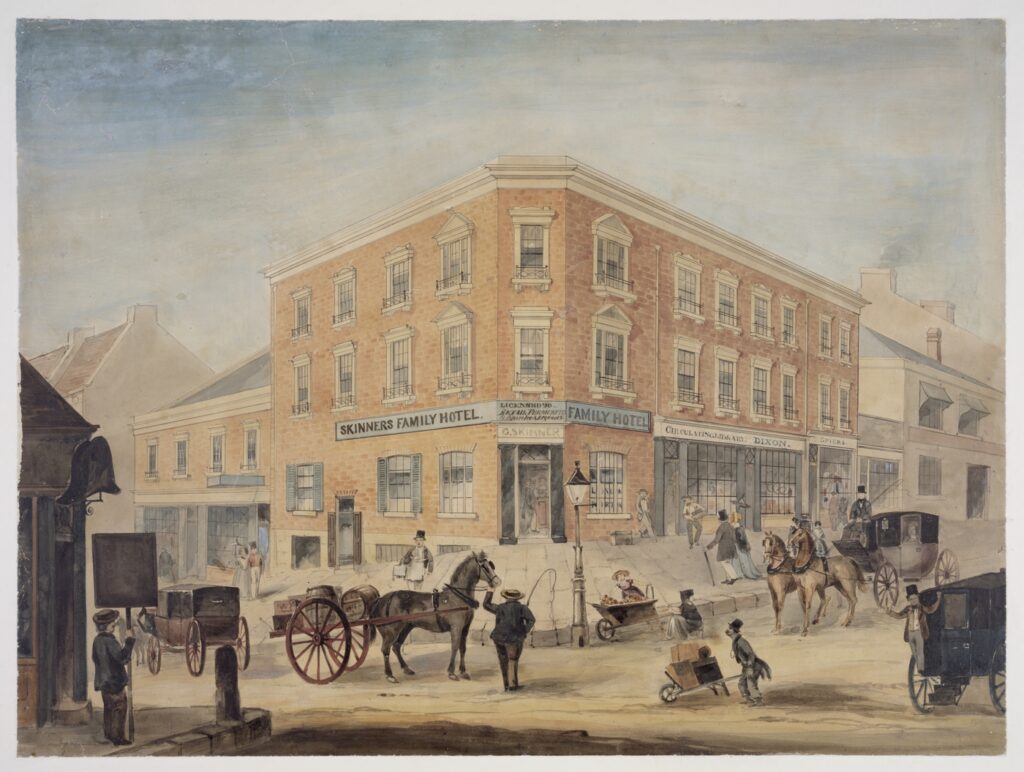
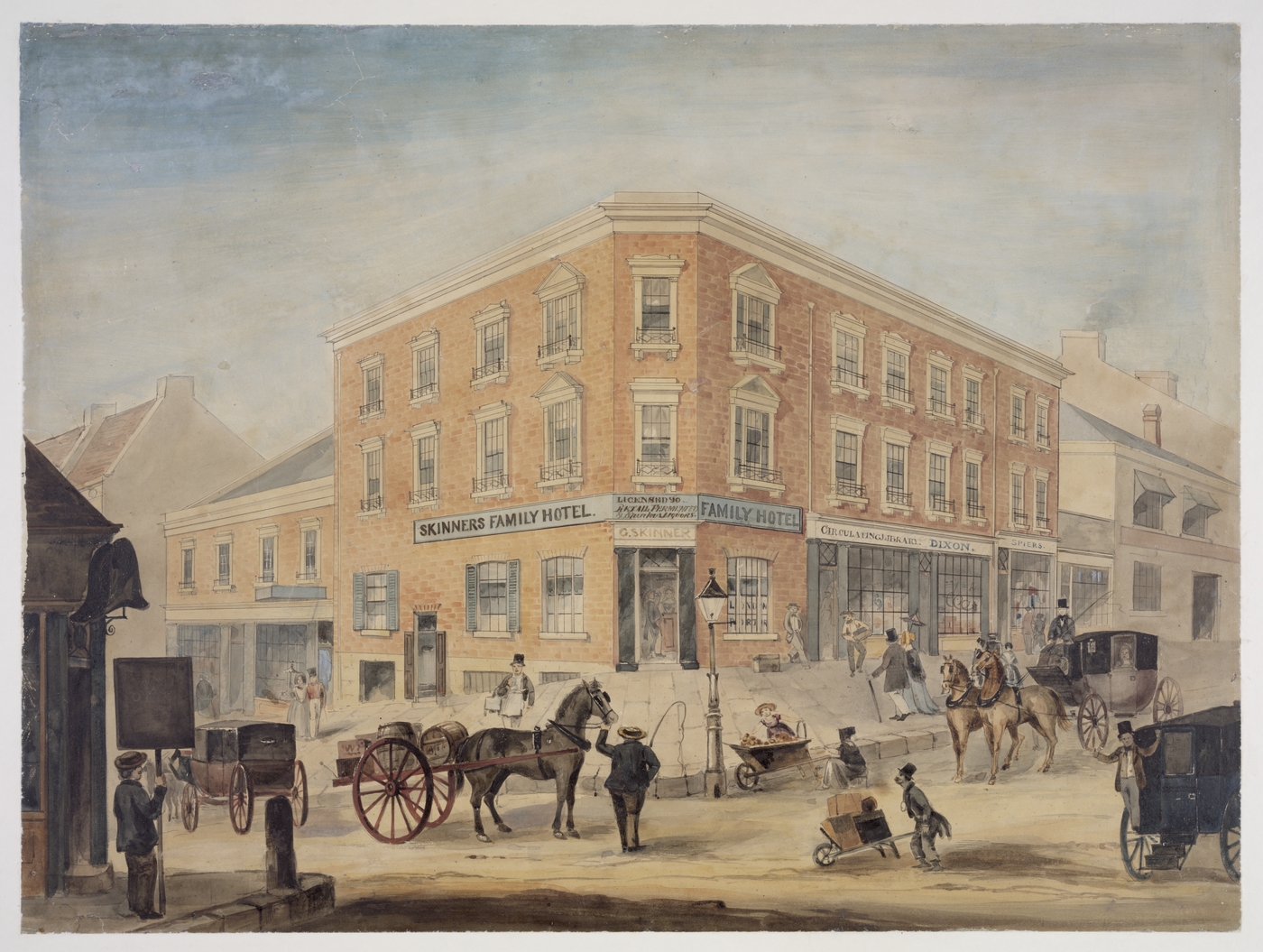
A particularly fine watercolour painted by Andrew Torning around 1849 depicts the hotel, complete with its signage, overlooking the bustling intersection of George and Hunter Streets.
The original watercolour is preserved in the State Library of New South Wales.
The building survives today at 296 George Street and is listed on the NSW State Heritage Register.
The Irwin Family
The discovery of the will of Jane Dacre Irwin has provided insight into George’s personal connections in Sydney.
Jane was the widow of Frederick Irwin, who had operated a toy shop at 329 George Street. The 1848 Brisbane Ward assessment book describes Frederick’s premises as a two-storey brick shop with seven rooms and a detached kitchen, owned by Thomas Smidmore.
The shop had a frontage of 25 feet 8 inches and a depth of 36 feet, with a recorded annual rack rent of £100. It may have served as both the family’s business and residence. The Irwins and Skinners were therefore both established in George Street in 1848, although the precise distance between their premises has yet to be determined. Following Frederick’s death in September 1849, Jane continued the business as a wire worker and toy seller.
The Will of Jane Dacre Irwin (1850)
On 15 June 1850, only six days before her death, Jane made her will.
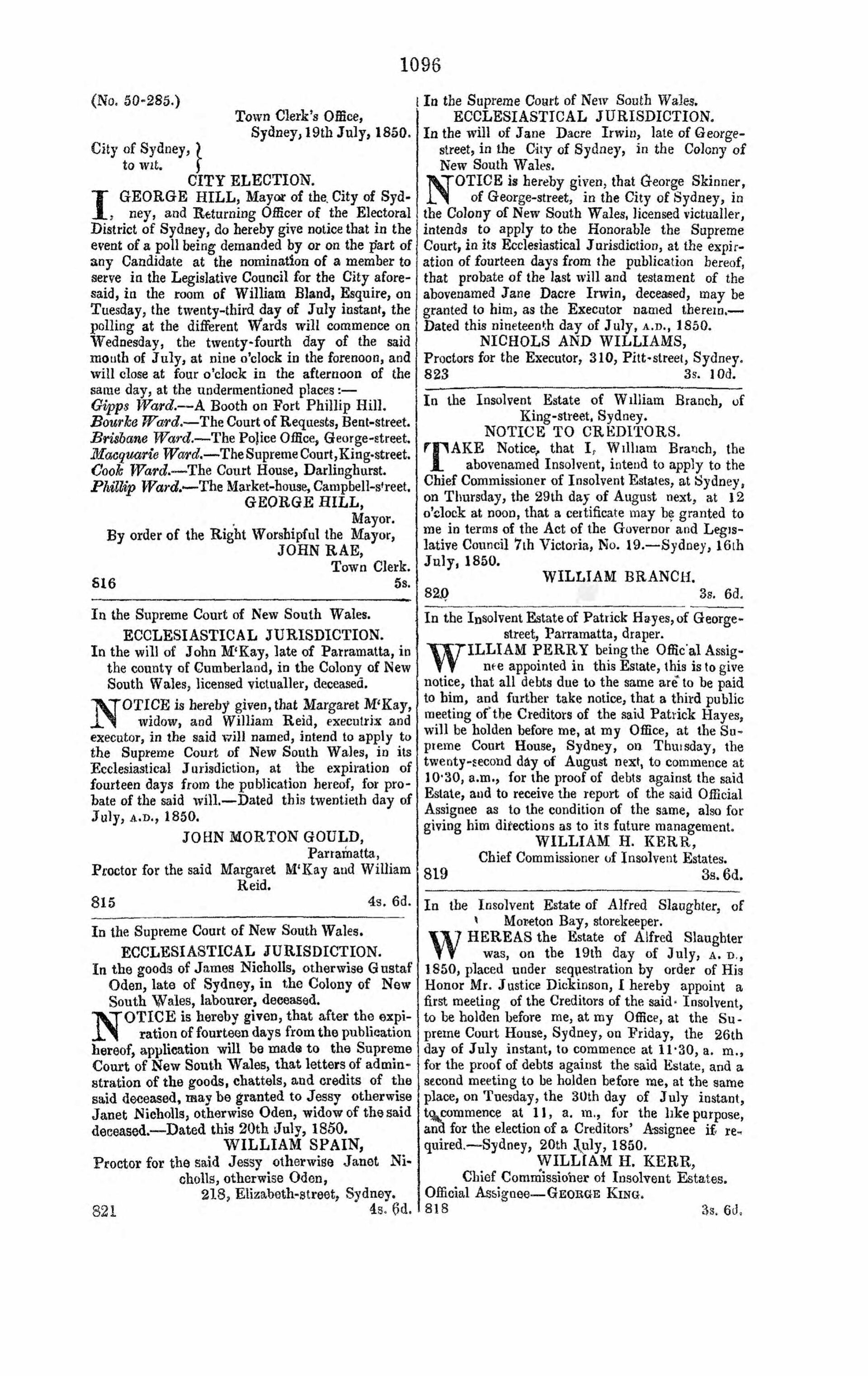
She appointed George Skinner as the sole executor of her estate, entrusting him with the sale of her property and the distribution and management of the proceeds for her three children, Elizabeth, Charles James and Edwin Irwin.
George was instructed to divide the estate into three equal shares, with the shares belonging to her sons being used for their maintenance, support and education until they reached the age of 21.
Jane also provided for her daughter Elizabeth to purchase the stock-in-trade of her business, should she wish to continue it.
Of particular interest is the appointment of Elizabeth Skinner and Jane’s daughter Elizabeth Irwin as guardians of her two sons.
And I do hereby nominate and appoint the said George Skinner Executor of this my Will and Elizabeth Skinner and my daughter Elizabeth Irwin Guardians of my said children Charles James Irwin and Edwin Irwin.
Will of Jane Dacre Irwin, 15 June 1850, registered Will No. 3061.
This suggests a considerable degree of trust between the Irwin and Skinner families.
Importantly, a notice published in the NSW Government Gazette in July 1850 identifies Jane’s executor as:
George Skinner, of George-street, in the City of Sydney, in the Colony of New South Wales, licensed victualler.
NSW Government Gazette, notice dated 19 July 1850, p. 1096, notice no. 823.
Probate was granted to George on 4 September 1850, with Jane’s estate valued at under £150.
The appearance of Elizabeth Skinner in the will is especially significant because Elizabeth was also the name of the wife of the George Skinner transported aboard the Albion in 1828.
The Brighton Estate
In August 1852, George was involved in a registered land transaction concerning Jane’s property at the Brighton Estate, in the area now associated with Enfield and Burwood.
The Brighton Estate formed part of an original Crown grant of 800 acres made to Simeon Lord on 8 October 1816, in the Parish of Concord, County of Cumberland. The estate was subsequently divided into smaller allotments.
The deed, recorded in the NSW General Register of Deeds, Book 23, No. 828, provides further evidence of George’s administration of Jane’s estate.
Further research may establish how the arrangements for the Irwin children’s inheritance and guardianship were managed following George’s departure from Australia later that year.
Preparing to Leave Australia (1852)
The year 1852 appears to have been a period in which George gradually wound up his business and personal affairs in New South Wales.
On 1 January 1852, he obtained a new seven-year lease of Skinner’s Hotel from Isaac Simmons.
The 1851 and 1852 Bourke Ward assessment books continued to record George as the person rated for the George Street premises, with an annual value of £250.
On 30 June 1852, George assigned his hotel lease for £400. The assignment, registered on 20 July, included the hotel premises and associated fixtures.
This transaction helps explain George’s continued appearance in the assessment books despite later historical accounts suggesting that another publican, Andrew Torning, had taken over the hotel in 1849. George evidently retained or renewed a legal interest in the property until 1852, although the precise arrangements for operating the hotel remain unclear.
The original lease and its subsequent assignment are recorded in the NSW General Register of Deeds, Book 22, No. 221 and Book 23, No. 399.
The Bligh Street Residence
By October 1852, George was residing in Bligh Street, opposite the stores of Campbell and Co.
An auction advertisement published on 15 October 1852 announced that George was about to leave the colony and that his household possessions would be sold at his residence on Monday, 25 October.
Among the items advertised was a Broadwood cottage pianoforte, described as having a particularly fine tone.
The sale of the hotel lease, the transaction involving the Irwin estate and the auction of his household effects all suggest that George was making preparations for his departure from Australia.
Return to England (1852)
In December 1852, George Skinner departed Sydney for London aboard the Clifton.
Mr. and Mrs. George Skinner … G. Skinner, jun.
Shipping Gazette and Sydney General Trade List, 11 December 1852.
After almost twenty-five years in New South Wales, the man believed to have arrived as a convict in 1828 was returning to England as a former hotelkeeper, accompanied by his wife and son.
His subsequent life in England remains the subject of ongoing research.
Records have been identified for a publican named George Skinner in London during the following years, but it has not yet been established that he was the man who returned from Sydney.
The Surviving Hotel
Although George left Australia in 1852, his name remained associated with his former hotel.
The building subsequently operated under other names, including Turner’s Hotel and the Clarendon Hotel, before being adapted for other commercial uses.
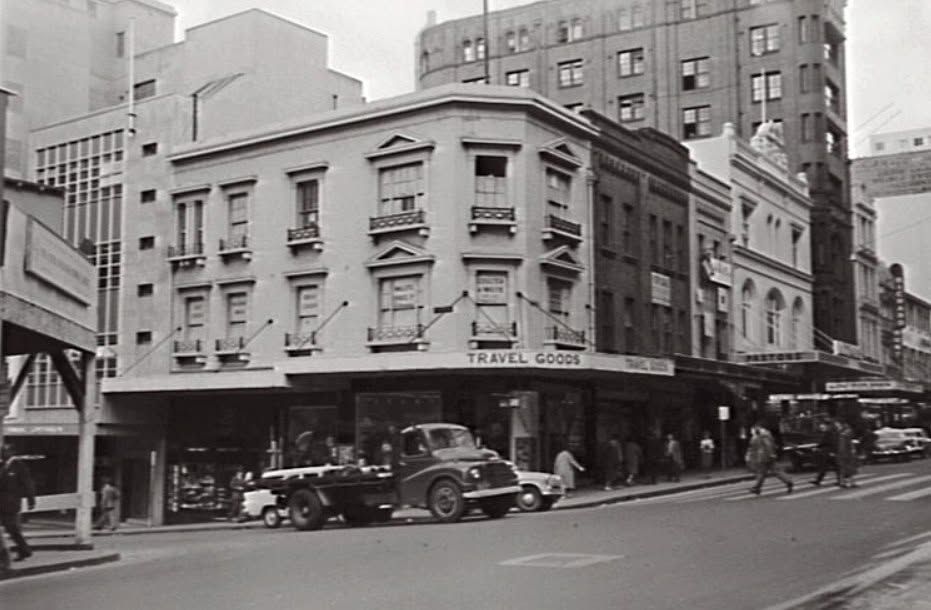
The former Skinner’s Family Hotel stands at 296 George Street, Sydney, on the corner of Hunter Street, near Wynyard Station.
Constructed in 1845–46 and designed by architect Henry Robertson, it is a rare surviving example of Old Colonial Regency architecture in Sydney. The building was added to the NSW State Heritage Register on 2 April 1999 (Heritage Listing No. 00584).
Although no longer operating as a hotel, the building retains the name of its first publican, George Skinner, and remains a distinctive landmark among the modern buildings of Sydney’s CBD.
The hotel provides a remarkable surviving connection to George’s life and to the commercial and social history of colonial Sydney.
Further information about the building is available through the NSW State Heritage Register – Skinner’s Family Hotel.
Research Note: Was the Convict the Hotelkeeper?
The identification of George Skinner, the convict transported aboard the Albion in 1828, with George Skinner, the Sydney hotelkeeper, rests on a strong accumulation of documentary evidence.
The principal connections are:
- The convict was a London-born merchant’s clerk, an occupation consistent with the commercial skills demonstrated by the later storekeeper.
- His wife was named Elizabeth, as established by her 1828 petition.
- An Elizabeth Skinner and child arrived in Sydney in 1836, shortly after George obtained his ticket of leave.
- His ticket of leave appears to have been altered to the Campbelltown district in 1838.
- George Skinner was appointed postmaster at nearby Elderslie in January 1839.
- The convict’s 1842 certificate of freedom was associated with Camden, where the storekeeper was established.
- The hotelkeeper’s own 1844 newspaper advertisement explicitly links him to the former Elderslie store and identifies George Skinner junior.
- Jane Irwin’s 1850 will names George Skinner and Elizabeth Skinner in positions of considerable responsibility, and the subsequent probate notice identifies George as the George Street hotelkeeper.
- The hotelkeeper departed for London in 1852 accompanied by his wife and son.
- George’s father had been a licensed victualler in London, providing a possible family connection to his later occupation.
Taken together, the geographic, occupational, chronological and family connections provide a compelling case that the records concern the same man.
Of particular significance are the Camden connection in the convict records, the identification of the Elderslie storekeeper as the Sydney hotelkeeper, and the discovery of Elizabeth Skinner in Jane Irwin’s will. These are independent records which, when considered together, support the proposed identification.
However, further evidence identifying the hotelkeeper’s wife by name, or explicitly linking the hotelkeeper to his convict ship, is still required before the identification can be regarded as conclusive.
It is also worth considering the social attitudes of the period. Some emancipists sought to distance themselves from their earlier lives, and convict origins were often concealed by families in subsequent generations. Given George’s apparent rise to a position of commercial success in Sydney, it would not have been unusual for him to have kept his convict origins private. This historical context may help explain why a direct connection between the two stages of his life has proved difficult to establish.
Research is continuing into George’s origins in England, his family circumstances, his life following his return to London and any possible relationship to the other Skinner families documented on this website.
Skinner’s Hotel [Corner of George and Hunter Streets, ca. 1849 / Andrew Torning], 1849.
296 George St, Sydney CBD, former Skinner’s Family Hotel ( A Jedrych, 2022)
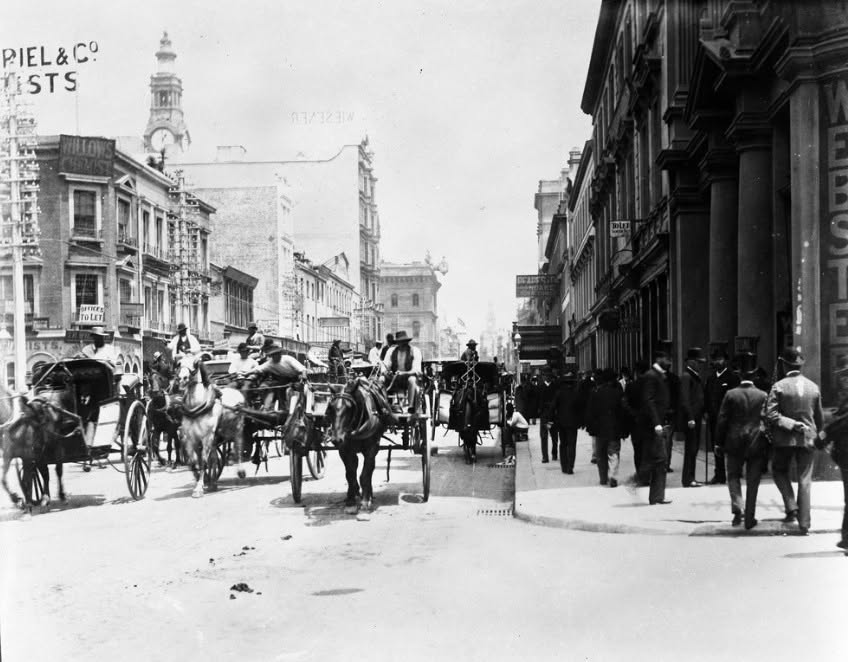
George St, Sydney CBD in 1890s. Former Skinner’s Family Hotel at 296 on left, at the time of this photo Willows Chemist (City of Sydney Archives)
296 George St, Sydney CBD. Former Skinner’s Family Hotel in 1962. at this time it was Wastie Travel Shop (City of Sydney Archives)
i3195652-00085 (1)
Elderslie Postmaster George Skinner
Returns of the Colony 1841
George Skinner Certificate of Freedom 1842
George Skinner Ticket of Leave 1832
18280221006George Skinner Old Bailey Trial 1828 P18
George Skinner Old Bailey Trial 1828 P2
George Skinner Old Bailey Trial 1828 P3
Sources and Further Reading
English and Convict Records
- Proceedings of the Old Bailey, trial of George Skinner, 21 February 1828.
- The National Archives, UK, petition of Elizabeth Skinner, 30 March 1828, HO 17/26, Cn27.
- Convict transportation registers, Albion, 1828, HO 11/6.
- NSW Convict Indents, George Skinner, Albion, 1828.
- NSW Ticket of Leave No. 35/182, 4 April 1835.
- NSW General Muster of Convicts, 1837.
- NSW Certificate of Freedom No. 42/1350, 6 August 1842.
- Surgeon Robert Wylie’s medical journal, Henry Wellesley, 1835–36.
- Returns of the Colony of New South Wales, postmaster at Elderslie, 1839–1840.
Newspapers
- Cowpasture Bridge General Store, Sydney Morning Herald, 28 October 1843.
- Entertainment at the Clown Hotel, Sydney Morning Herald, 26 October 1844.
- Notice concerning the former Elderslie store, Sydney Morning Herald, 18 December 1844.
- Musical entertainments at Skinner’s Clown Hotel, Sydney Morning Herald, 10 February 1845.
- Independent Order of Odd Fellows, Sydney Morning Herald, 10 October 1846.
- Removal to George and Hunter Streets, The Australian, 12 January 1847.
- Sale of household possessions, Sydney Morning Herald, 15 October 1852.
- Passengers aboard the Clifton, Shipping Gazette and Sydney General Trade List, 11 December 1852.
Property and Probate Records
- City of Sydney Archives, Bourke Ward Assessment Book, 1848, CSA027142, p. 15, assessment no. 253.
- City of Sydney Archives, Bourke Ward Assessment Book, 1851, CSA027144, p. 3, assessment no. 44.
- City of Sydney Archives, Bourke Ward Assessment Book, 1852, CSA027143, p. 3, assessment no. 44.
- City of Sydney Archives, Bourke Ward Assessment Book, 1855, CSA027145, p. 28, assessment no. 528.
- City of Sydney Archives, Brisbane Ward Assessment Book, 1848, CSA027176, p. 19, assessment no. 369.
- Will of Jane Dacre Irwin, 15 June 1850, registered Will No. 3061; probate granted 4 September 1850.
- NSW Government Gazette, notice dated 19 July 1850, p. 1096, notice no. 823.
- NSW General Register of Deeds, Book 22, No. 221, lease of Skinner’s Hotel, 1 January 1852.
- NSW General Register of Deeds, Book 23, No. 399, assignment of hotel lease, 30 June 1852.
- NSW General Register of Deeds, Book 23, No. 828, property transaction concerning the estate of Jane Dacre Irwin, August 1852.
The registered land deeds can be accessed through the NSW Historical Land Records Viewer.
Historical Illustrations and Further Research
- Joseph Fowles, Sydney in 1848.
- Andrew Torning, Skinner’s Hotel, c.1849, State Library of New South Wales.
- George Skinner, Australharmony Biographical Register, University of Sydney.
- Skinner’s Family Hotel, NSW State Heritage Register.
- Historical Atlas of Sydney, City of Sydney Archives.